
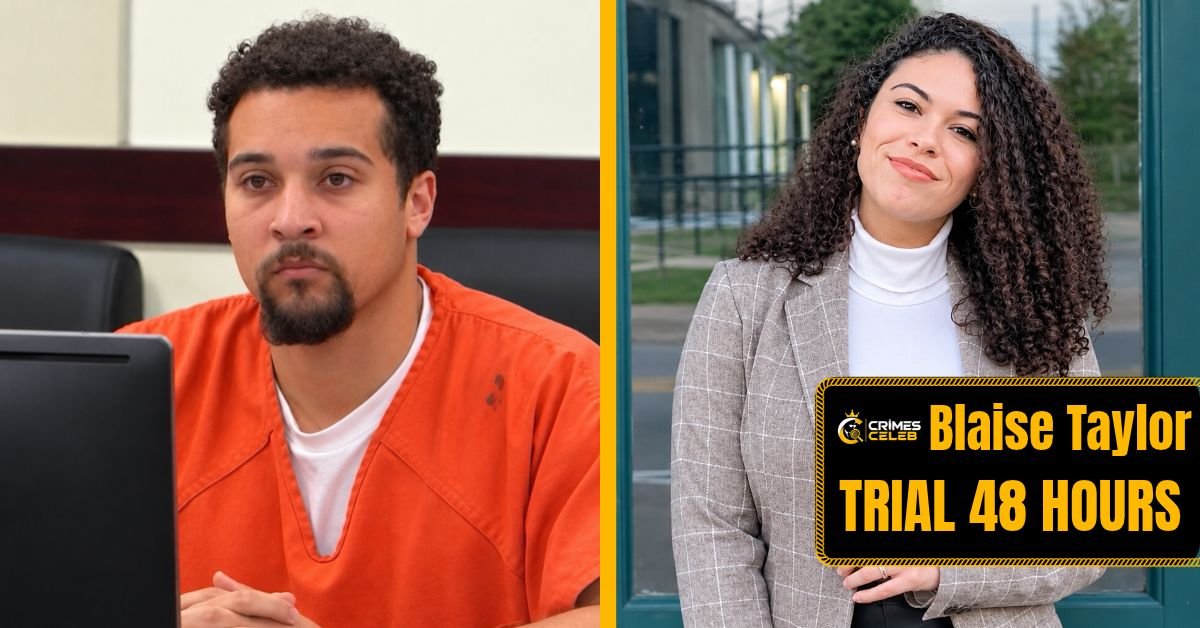
The Blaise Taylor trial ended in Nashville on July 1, 2026, when a Davidson County jury convicted the former Tennessee Titans scout in the deaths of his girlfriend, Jade Benning, and their unborn daughter. Prosecutors argued that Taylor secretly put a lethal dose of cocaine in Benning’s drink during a date night at her apartment on February 25, 2023. Benning was about five months pregnant.
The case moved quickly after the verdict. Jurors reached their decision in roughly two to three hours, depending on the report, and on September 9, 2026, Judge Steve Dozier sentenced Taylor to two consecutive life terms. Taylor’s attorneys have said he maintains his innocence and that they will appeal.
This article explains what happened, how the prosecution and defense argued the case, what the jury decided, and where the matter stands now. It draws on reporting from Nashville television stations, Court TV, CBS News and 48 Hours, and the Davidson County District Attorney’s office, and it keeps court findings separate from the claims each side made.
Blaise Taylor Case At A Glance
Most readers searching for the Blaise Taylor case want the essentials first: who was involved, what the jury decided, and what sentence followed. The details below come from local news coverage and the District Attorney’s public statement, and they reflect the status of the case as of November 1, 2026.
Where outlets report slightly different figures, such as the length of the trial or the former scout’s years with the Titans, the later section on conflicting details explains the differences.
| Category | Details |
| Defendant | Blaise Allen Taylor |
| Background | Former Arkansas State defensive back and Tennessee Titans scout |
| Victims | Jade Benning, 25, and her unborn daughter, Ivy |
| Alleged Poisoning Date | February 25, 2023 |
| Ivy’s Death | February 27, 2023 |
| Jade Benning’s Death | March 6, 2023 (her 25th birthday) |
| Arrest | March 14, 2024, in Utah |
| Trial Began | June 22, 2026 |
| Verdict | July 1, 2026 – Guilty on four counts |
| Sentencing Date | September 9, 2026 |
| Judge | Steve Dozier |
| Sentence | Two consecutive life sentences, plus 22 years |
| Appeal | Defense attorneys plan to appeal |
Who Is Blaise Taylor?
Blaise Taylor played defensive back at Arkansas State from 2014 to 2017 and was a four year starter. He is the son of longtime college coach Trooper Taylor, who was on the Arkansas State staff during part of his son’s time there and is now an associate head coach at Texas A&M. After college, Taylor spent time as a graduate assistant at Duke.
He then joined the Tennessee Titans in a scouting role. Outlets give different start years for that job, but they agree he spent roughly four years in the organization and left in 2023. That same year he became an analyst with the Utah State football program, a job he began on July 1, 2023 and left on March 1, 2024, according to the university.
Taylor had been announced as an analyst at Texas A&M shortly before his arrest, and the school placed him on suspension pending an investigation. At trial he was described by his family as a high achiever who earned bachelor’s and master’s degrees in business while playing football and helped start a nonprofit with his sister, Starr.
Who Was Jade Benning?
Jade Benning grew up in Little Rock, Arkansas, where she captained her high school cheerleading squad. Her father, Dennis Browning, described her to 48 Hours as a bridge builder who tried to keep peace between her divorced parents. She moved to Nashville to build a career as a professional chef, with a long term goal of opening her own restaurant.
Benning and Taylor met on a dating app and began seeing each other casually in 2022. In November 2022, about three months into the relationship, Benning told her mother she was pregnant. She learned the baby was a girl and chose the name Ivy. Her family said she wanted the pregnancy and was willing to raise the child without Taylor if necessary.
The relationship cooled for a time, then resumed after Taylor contacted her on New Year’s Eve 2022. By the night of the date at her apartment, she was nearly six months pregnant, about 24 weeks. Her family and friends have said she was excited to become a mother, and the family has since announced plans for a scholarship in her name.
What Happened On February 25, 2023?
According to 48 Hours, Benning planned a special evening at her Lebanon Pike apartment, with dinner followed by painting. Taylor arrived for the date, and the two took selfies. Taylor later told police that Benning began to feel unwell, started spitting up and shaking, and that he first phoned his father before calling 911 at about 9:38 p.m., saying he believed she was having an allergic reaction.
Emergency responders found Benning face down on her bed without a pulse and took her to Vanderbilt University Medical Center. Her best friend, Nijaiha Jackson, testified that Benning had called her shortly before the collapse. The call lasted a little over six minutes and was not recorded, so the jury relied on Jackson’s account of what she heard.
Benning never regained consciousness. Doctors told her mother she had gone about 45 minutes without oxygen, and she was declared brain dead and kept on life support. Ivy died on February 27. The family waited until Benning’s birthday, March 6, 2023, before life support was withdrawn, and she died that day at age 25.
Timeline Of The Blaise Taylor Case
The sequence of events spans more than three years, from the night of the poisoning to the sentencing. Dates below are drawn from police statements, the District Attorney’s office and consistent local reporting.
The timeline helps explain why the case took so long to reach trial. The medical examiner’s autopsy was not finished until months after the deaths, and the manner of death was never formally listed as homicide.
- February 25, 2023: Taylor calls 911 and Benning is taken to Vanderbilt University Medical Center
- February 27, 2023: Ivy dies
- March 6, 2023: Benning dies on her 25th birthday
- July 2023: Taylor begins work as an analyst at Utah State
- Roughly five months after the deaths: The autopsy concludes that Benning died from acute cocaine toxicity from ingestion, with the manner of death listed as could not be determined
- March 14, 2024: Taylor is arrested in Logan, Utah, on a Nashville grand jury indictment charging two counts of first degree murder
- April 2024: Taylor posts a $2.5 million bond set by Judge Dozier and is released
- June 22, 2026: Trial begins in Nashville
- July 1, 2026: Jury returns guilty verdicts on four counts
- September 9, 2026: Judge Dozier imposes sentence
How The Investigation And Arrest Unfolded
Police did not seal Benning’s apartment immediately. According to 48 Hours, Jackson and three friends entered the apartment the day after Benning was hospitalized, wearing gloves and recording video. Jackson testified that she moved a security camera from the bedroom back to the kitchen, where she remembered it, and that the group bagged a vomit stained comforter. Nothing usable was recovered from the camera.
Police secured the scene the following day and collected drinks and other items for testing. No cocaine was found in those drinks, and there was no evidence that Taylor bought drugs. Cocaine was identified in the vomit on the comforter. Benning’s blood and urine had tested positive for cocaine at the hospital, and the later autopsy found levels the medical examiner described as rarely seen.
A Nashville grand jury indicted Taylor on two counts of first degree murder, and the Marshals Service arrested him in Utah at the request of Metro Nashville Police. He first appeared in court by video on April 3, 2024. Prosecutors said they would seek life without parole, and he was released on a $2.5 million bond a few weeks after his arrest.
Blaise Taylor Trial: Courtroom Timeline
The trial opened on June 22, 2026, in Davidson County with Judge Steve Dozier presiding. Taylor pleaded not guilty. The state was led by Assistant District Attorney Jan Norman, with prosecutors Roger Moore and Kendall Ponchillia. Taylor was represented by Letitia Quinones Hollins and Jim Sanders. Court TV published daily highlights, and several Nashville stations ran live coverage.
Early days focused on first responders, police, the 911 audio and phone data, including text messages between Benning and Taylor. Mid trial testimony came from Dr. Erin Carney of the Davidson County medical examiner’s office and from Jackson. A detective testified about digital evidence, and the defense raised text messages suggesting Benning had been in contact with another man after her relationship with Taylor changed.
The jury heard seven days of testimony, followed by closing arguments on the eighth day. Taylor chose not to testify. Reports describe the proceeding variously as a seven, eight or nine day trial, depending on whether jury selection, closings and deliberations are counted. The verdict arrived on Wednesday, July 1, 2026, a little after 2 p.m.
What Prosecutors Presented
The prosecution’s theory was that Taylor did not want to become a father and used liquid cocaine to end the pregnancy. Prosecutors said the poison was meant to cause Benning to lose the baby and that Benning’s call to Jackson disrupted the plan. Norman told jurors that Benning named Taylor as the person who put something in her drink.
Dr. Carney testified that Benning had very high levels of cocaine in her system and no known history of cocaine use. She signed the death certificate as ingested cocaine but listed the manner of death as undetermined, saying the circumstances were suspicious of someone giving it to her without her knowledge. According to 48 Hours, the level was more than seven times what is typical in fatal cocaine overdoses.
Prosecutors also called Apple Dennie, who dated Taylor on and off at Arkansas State and testified about conversations in 2017. She said Taylor asked her about getting abortion pills to give to another woman secretly, and that no pill was obtained. Friends and family also testified that Taylor had been unhappy about the pregnancy and had once suggested ending it.
What the Defense Argued
The defense argued that the state never proved what killed Benning or that Taylor caused it. Quinones Hollins pointed to the medical examiner’s undetermined manner of death and said nothing physically tied Taylor to the cocaine. She also noted that Jackson’s account of the phone call rested on one person’s memory, and questioned why Jackson did not call 911 herself.
Defense experts testified about cocaethylene, a compound formed when cocaine and alcohol are in the body together, and about trace fentanyl found on the comforter. The defense suggested these findings pointed to other drug use. The state replied that the cocaethylene level was too small to report, that the comforter had been handled by several people, and that Benning had stopped drinking after learning she was pregnant.
Defense lawyers also showed a text exchange from the day of the collapse between Benning and a contact saved as a drug dealer, and they questioned the decision to move the camera and take the comforter. Sanders argued that Dennie’s testimony was prejudicial character evidence that should not have been allowed. He also said Taylor’s actions that night, calling 911 and cooperating with police, were not those of a guilty person.
Blaise Taylor Verdict: The Four Counts
Jurors deliberated for roughly two to three hours before returning unanimous verdicts. They convicted Taylor on all four counts. Notably, the jury chose second degree murder rather than first degree for Benning, which is a lesser charge than prosecutors had pursued for her death.
The jury also recommended life in prison. Taylor’s bond was revoked after the verdict, and family members from both sides gave impact statements. His attorneys said they respectfully disagreed with the verdict and would appeal.
- Count 1: Second degree murder of Jade Benning
- Count 2: First degree premeditated murder of the unborn child, Ivy
- Count 3: First degree felony murder of Jade Benning
- Count 4: First degree felony murder of the unborn child
Sentencing: Two Consecutive Life Terms
At the September 9, 2026 hearing, Judge Dozier sentenced Taylor to two consecutive life sentences for the felony murder convictions, with a 22 year term at 100 percent for second degree murder. WSMV reported that the consecutive life terms mean he would have to serve 102 years before any possible release, while NewsChannel 5 reported earlier that a single life term carries 51 years before parole eligibility.
Norman asked for consecutive sentences and told the court that 87 letters submitted on Taylor’s behalf described a man of honor but did not mention Benning or Ivy. She also pointed to the testimony about Taylor considering poisoning another woman. Judge Dozier agreed that both victims deserved a just punishment and described the crime as showing cruelty and calculation.
Benning’s mother, Bridget Benning Burks, told the court that the hardest part was knowing her daughter had believed she was safe. Her father said the outcome brought closure but not relief from the loss. Taylor’s attorney called the sentence harsh but not surprising and said the trial was flawed and the case tenuous.
Blaise Taylor Appeal: Where the Case Stands Now
Quinones Hollins has said the defense will appeal, and the family told 48 Hours that Taylor’s legal team is working on the process. As of November 1, 2026, the sources reviewed for this article describe the appeal as planned or in progress but do not identify a filed brief, a docket number or a hearing date, so the specific grounds have not been publicly confirmed.
Based on statements made at and after trial, the defense has signaled concerns about the admission of testimony from Dennie, the handling of evidence from Benning’s apartment, and whether the proof established a homicide. These are arguments the defense has made publicly, not rulings by any court, and the conviction remains in effect while any appeal is pending.
Readers should treat the status of the appeal as time sensitive. Appeals in Tennessee generally take months to resolve, and the most reliable updates will come from the Davidson County court records, the District Attorney’s office and the Tennessee appellate courts rather than from social media discussion.
The 48 Hours Report on Jade Benning and Blaise Taylor
CBS News published a 48 Hours report on the case on October 31, 2026, written by correspondent Natalie Morales and produced by Ruth Chenetz. The report follows the evening of the date, the 911 call, the hospital vigil, the investigation, the trial and the verdict, and it includes interviews with Benning’s parents, Jackson and members of Taylor’s family.
The report is notable for adding voices that trial coverage did not always capture. Taylor’s mother, Evi Taylor, and sister Starr said they believe he is innocent, and Taylor’s attorneys repeated their arguments about the missing physical link to the cocaine. Benning’s family described her personality and the plans she had for Ivy.
Viewers searching for the episode should check CBS News and Paramount Plus listings for broadcast and streaming details, since this article does not confirm a specific air time. The written 48 Hours report, titled with a reference to Benning’s final call to a friend, is available on the CBS News website.
Where Coverage Of The Case Differs
Because dozens of outlets covered the case, small differences appear. Reports give different start years for Taylor’s Titans job, including 2019, 2021 and a general four year span. The length of the trial is reported as seven, eight or nine days, and deliberation is described as about two hours, just over two and a half hours or about three hours.
Reports also differ on parole. One local report described the sentence as being without the chance of parole, while the jury had recommended life with the possibility of parole and WSMV described a 102 year minimum before release. The District Attorney had originally sought life without parole before the trial, which may explain some of the confusion.
When figures conflict, the court record is the most dependable source. Readers who need exact details should consult the sentencing orders and judgment forms from the Davidson County court clerk. The facts in this article that do not vary between outlets, including the dates of the deaths, the verdict and the sentencing, are consistent across all sources reviewed.
Frequently Asked Questions
Was Blaise Taylor found guilty?
Yes. On July 1, 2026, a Davidson County jury convicted Taylor on four counts: second degree murder of Jade Benning, first degree premeditated murder of their unborn child, and two counts of felony murder. He pleaded not guilty and did not testify.
What sentence did Blaise Taylor receive?
On September 9, 2026, Judge Steve Dozier sentenced Taylor to two consecutive life sentences for the felony murder convictions plus 22 years for second degree murder. WSMV reported he would have to serve 102 years before any release.
What did prosecutors say Blaise Taylor did?
Prosecutors said Taylor put liquid cocaine in Benning’s pink lemonade during a date night on February 25, 2023, because he did not want to become a father. The defense denied this and argued the evidence did not prove what caused her death.
Who was Jade Benning?
Jade Benning was a 25 year old professional chef from Little Rock, Arkansas, who moved to Nashville to build her career. She died on March 6, 2023, her birthday, after being hospitalized for more than a week. She was about 24 weeks pregnant with a daughter she planned to name Ivy.
How long was the Blaise Taylor trial?
The trial began June 22, 2026, with seven days of testimony followed by closing arguments on the eighth day. Some outlets report it as a nine day trial. The jury deliberated for roughly two to three hours before reaching the verdict on July 1.
Is Blaise Taylor appealing his conviction?
His attorneys have said they will appeal and that Taylor maintains his innocence. As of November 1, 2026, public reporting has not confirmed the specific grounds or any filing details, so the status should be checked with court records.
Who were the judge and attorneys in the Blaise Taylor trial?
Judge Steve Dozier presided. Prosecutors were Jan Norman, Roger Moore and Kendall Ponchillia. Taylor was defended by Letitia Quinones Hollins and Jim Sanders. Key witnesses included Nijaiha Jackson, Dr. Erin Carney and Apple Dennie.
Did 48 Hours cover the Blaise Taylor case?
Yes. CBS News published a 48 Hours report on October 31, 2026, with correspondent Natalie Morales. It includes interviews with Benning’s family, her friend Jackson and Taylor’s relatives. Check CBS News or Paramount Plus for broadcast and streaming details.
Conclusion
The Blaise Taylor trial produced convictions on all four counts and two consecutive life sentences, ending a case that began with a 911 call on February 25, 2023. Prosecutors persuaded the jury that Taylor intentionally poisoned Jade Benning and their unborn daughter, relying heavily on Benning’s call to her friend, the toxicology findings and testimony about his earlier statements.
The defense position remains that the evidence was too thin to prove how Benning died or that Taylor was responsible, and an appeal is expected. For anyone following the Blaise Taylor trial, the verdict and sentence stand for now, and the next developments will come from the appellate courts.

Rohan Verma is the author behind Crimes Celeb, focusing on celebrity-related crimes, crime news, famous criminals, celebrity scandals, and unsolved mysteries. Their goal is to deliver accurate, engaging, and informative stories that uncover the darker side of fame and make complex crime cases easier to understand.
One Comment