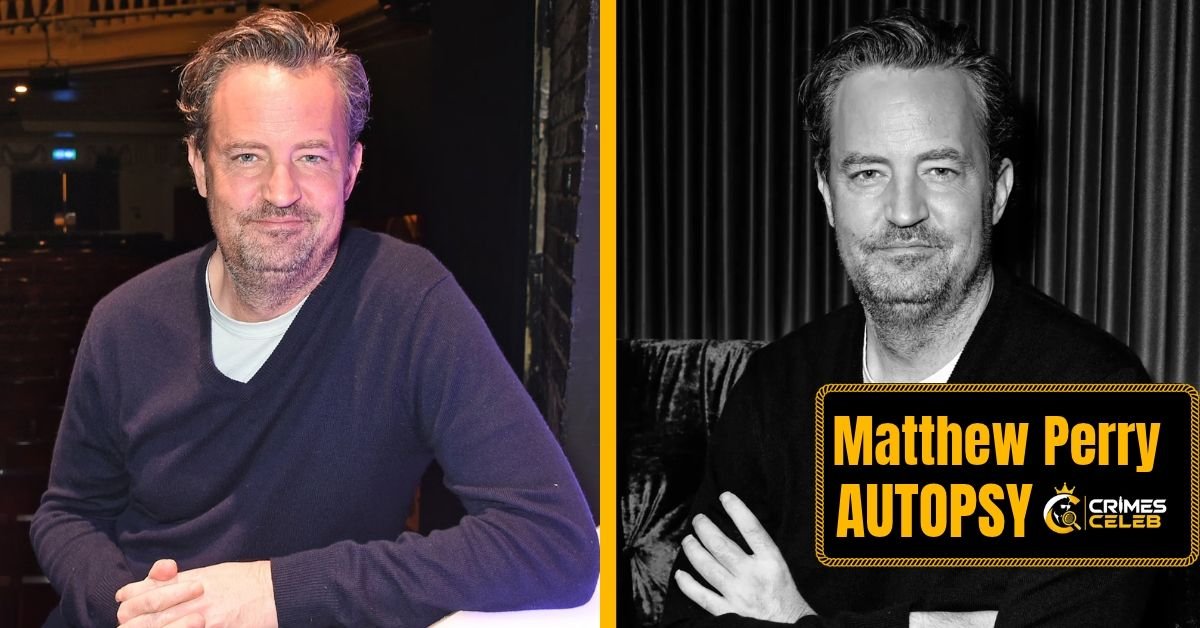
The Matthew Perry autopsy answered the question millions of people were asking after the Friends star died at age 54. The Los Angeles County medical examiner concluded that Perry died from the acute effects of ketamine, with drowning, coronary artery disease and buprenorphine effects listed as contributing factors rather than the primary cause. The report was released on December 15, 2023, nearly seven weeks after his death.
The findings raised a second, harder question: how did that much ketamine end up in his body? The autopsy said the death was an accident, but it also said the route by which the drug entered his system was unknown. The answer came later, through a federal investigation that led to charges against five people and, by May 2026, five sentences.
This article walks through what the autopsy report actually says, how its toxicology numbers should be read, what the investigation added, and which popular questions the public record still cannot answer. It also covers the related details readers search for most, including his funeral, his estate and his personal life.
What the Matthew Perry Autopsy Report Says
Official Cause And Manner Of Death
The Los Angeles County Department of Medical Examiner ruled that Perry’s cause of death was the acute effects of ketamine. The manner of death was ruled an accident, and the report noted no signs of foul play. Senior Deputy Medical Examiner Raffi Djabourian signed the determination, and the autopsy itself was carried out the day after Perry was found.
Perry was found unresponsive in the pool at his home in the Pacific Palisades area of Los Angeles on October 28, 2023, and paramedics pronounced him dead at the scene. The death certificate later gave the time of death as 4:17 p.m. and, at first, listed the cause as deferred while testing was completed.
The phrase “acute effects” matters. It means the ketamine in his system at the time of death was itself responsible, rather than a long term complication of past drug use. That distinction becomes important when the report discusses his infusion therapy, which is covered further below.
Read More: Kobe Bryant Autopsy Report: Official Findings, Cause Of Death And What Is Confirmed
Toxicology Results And Ketamine Levels
The toxicology section is the part of the report people search for most often. It gives two blood measurements, one from a peripheral vein and one from the heart, and it compares them with the range seen in surgical anesthesia. The comparison is the reason the levels were described as high.
Readers sometimes confuse the substances that were detected with the ones that were not. According to USA Today’s review of the 29 page report, alcohol, methamphetamine, cocaine, heroin, PCP and fentanyl were not detected. The report also noted lorazepam at a nontoxic level and buprenorphine at a therapeutic level.
- Peripheral blood ketamine: 3,540 ng/mL
- Central blood ketamine: 3,271 ng/mL
- Reference range for surgical anesthesia: 1,000 to 6,000 ng/mL, as stated in the report
- Stomach contents: trace amounts of ketamine
- Not detected: alcohol, methamphetamine, cocaine, heroin, PCP and fentanyl
Contributing Factors: Drowning, Heart Disease And Buprenorphine
The report lists three contributing factors, and each one has a specific explanation. The medical examiner wrote that at such high levels, the main lethal effects of ketamine would be cardiovascular overstimulation and respiratory depression. The three contributors then work on top of that primary effect.
Drowning contributed because Perry likely slipped under the water as he lost consciousness. Coronary artery disease contributed because it worsened the effect of ketamine on the heart muscle. Neither of these was the root cause. They describe what happened once the ketamine had taken hold.
Buprenorphine, a medication used to treat opioid use disorder, was listed because its breathing effects add to those of ketamine, even though it was not at toxic levels. The presence of a therapeutic level of a prescribed medication was therefore recorded as a factor, not as evidence of a relapse into opioid misuse.
Other Medical Findings In The Report
The report also documented Perry’s general health. It described a history of chronic obstructive pulmonary disease and emphysema, diabetes, and heavy tobacco use for many years, although he was reportedly not smoking at the time of his death. These details appear in the case summary at the start of the report.
Coverage citing the Daily Mail added that the examiner noted chronic hepatic congestion in the liver and nephrosclerosis of the kidneys, both linked to long standing health problems. These are secondary findings, and the report did not name them as causes of death.
The same case summary recorded that Perry was reportedly clean for 19 months before he died. That line is attributed in the report to interviews conducted by the coroner’s investigator, so it reflects what witnesses said rather than an independent test result.
Why The Autopsy Was Listed As Deferred
What Deferred Meant
After Perry was found, the medical examiner’s website briefly showed the case as deferred. The office had completed an autopsy, but it listed the case as deferred and later removed it from the site. Many readers interpreted this as secrecy, and searches for “Matthew Perry autopsy deferred” rose sharply.
In practice, a deferred listing means the cause of death cannot yet be certified because further testing is needed. Toxicology and other laboratory work can take weeks. In Perry’s case the finished report arrived on December 15, 2023, which is consistent with a case that depended on drug testing.
The initial wording of the death certificate followed the same pattern. It recorded the date, place and time of death and left the cause open, which is standard when results are pending. The final determination replaced that placeholder once the laboratory results were complete.
The Final Day And The Days Before It
Reconstructing the last days of Perry’s life draws on three sources: the autopsy narrative, the plea agreements in the federal case and sentencing coverage. The autopsy covers what witnesses told investigators, while the court documents cover what the defendants admitted.
- Mid October 2023: Prosecutors say Kenneth Iwamasa began obtaining ketamine through Erik Fleming and Jasveen Sangha, according to Fox LA’s timeline.
- October 24, 2023: Fleming delivered a second batch of 25 vials, and injections of six to eight a day followed through October 27.
- October 28, 2023, morning: Perry went out to play pickleball around 11 a.m. and returned about two hours later, according to witnesses quoted in the report.
- October 28, 2023, afternoon: Iwamasa admitted injecting Perry at his request before leaving to run errands, then returned to find him floating in the hot tub.
- October 28, 2023, evening: Firefighters pulled Perry from the water and determined he had died before they arrived.
Ketamine Therapy And Why The Report Ruled Out the Infusions
What Ketamine Is Used For
Ketamine is a dissociative anesthetic. The report itself describes it as having established medical and surgical uses, and it notes that the drug is also used in recreational and illicit settings. Doctors give it for anesthesia, and some clinics offer supervised infusions for depression, anxiety and related conditions.
Perry had been receiving ketamine infusion therapy for depression and anxiety, with his last treatment about a week and a half before his death. That fact led many people to assume the therapy itself had killed him. The medical examiner addressed that assumption directly.
Supervised infusion therapy and what happened in Perry’s final weeks are very different things. The first involves a licensed clinician, controlled dosing and monitoring. The second, as later court records showed, involved illegally supplied vials and injections given by an assistant with no medical training.
Why the Infusion Therapy Did Not Explain the Levels
The report states that the ketamine in Perry’s system could not have come from the infusion therapy, because the drug’s half life is three to four hours or less. A treatment given more than a week earlier would have cleared his system long before October 28.
This reasoning is why the examiner called the death accidental but treated the source of the drug as unexplained. The report concluded that the ketamine had been taken in another manner, and it said how that happened was unknown. The autopsy was never designed to answer that question, because it examines the body rather than the supply chain.
Investigators then followed the drug trail, and the federal case supplied the missing explanation. The next section summarizes it, and the limits of that explanation are covered near the end of the article.
From Autopsy To Prosecution
The Five Defendants And Their Roles
Five people were charged in August 2024 and all five pleaded guilty, which meant no trial took place. Their roles ran from the supplier at the top of the chain to the assistant who handled Perry’s injections each day.
Prosecutors alleged that the chain began with doctors and ended with a street level dealer. According to the Variety and AP accounts, Dr. Salvador Plasencia supplied ketamine from September 2023 and taught Iwamasa how to inject it. Sangha supplied the batch that, in prosecutors’ words, caused the fatal dose.
- Jasveen Sangha: the dealer known as the “Ketamine Queen,” who prosecutors said sold Perry 25 vials for $6,000 four days before he died
- Erik Fleming: a drug counselor who admitted passing ketamine from Sangha to Perry’s assistant
- Kenneth Iwamasa: Perry’s live in personal assistant, who pleaded guilty to conspiracy to distribute ketamine resulting in death
- Dr. Salvador Plasencia: a Los Angeles area doctor who admitted injecting Perry with some of the initial vials
- Dr. Mark Chavez: the source of the doses Plasencia sold to Perry
Sentences Handed Down
The sentences were issued by U.S. District Judge Sherilyn Peace Garnett. The longest went to Sangha, whose case prosecutors presented as the most serious because she ran what they described as a drug operation and sold the fatal batch. The sentences below follow AP and other coverage through May 2026.
Coverage differs on one detail: the month of Plasencia’s sentencing. Fox LA places it in December 2025, while AP describes it as July. The two and a half year term is consistent across outlets, so that is the figure used here.
- Jasveen Sangha: 15 years in prison, followed by three years of supervised release, sentenced April 8, 2026
- Dr. Salvador Plasencia: two and a half years in prison
- Erik Fleming: 24 months in prison and three years of supervised release, sentenced May 13, 2026
- Kenneth Iwamasa: 41 months in prison, two years of probation and a $10,000 fine, sentenced May 27, 2026
- Dr. Mark Chavez: eight months of home detention
Matthew Perry’s Life, Career And Legacy
Career Highlights
Perry is best remembered as Chandler Bing. He appeared in every episode of Friends during its ten season run from 1994 to 2004, which made him one of Hollywood’s most recognizable actors. The role also earned him multiple Emmy nominations.
Outside the sitcom, he built a film and television career that included romantic comedies and later dramatic and stage work. Readers searching for his movies and TV shows most often want the standouts, which are listed below.
- Friends (1994 to 2004): his defining role as Chandler Bing
- Fools Rush In (1997): a romantic comedy in which he starred opposite Salma Hayek
- The Whole Nine Yards (2000): a film in which he worked alongside Bruce Willis
- 17 Again: a later comedy film in which he played the adult version of the lead character
- Memoir (2022): Friends, Lovers, and the Big Terrible Thing, in which he wrote candidly about his addiction
Marriage, Engagement And Family
A common search is about Perry’s wife, and the answer is that he never had one. His death certificate confirms he never married, although he was engaged to Molly Hurwitz from 2020 to 2021. At the time of his death he had no children.
Hurwitz and Perry began dating in 2018, he proposed in November 2020, and they called off the engagement in June 2021. After his death she posted a public tribute, writing that he was complicated and that no one in her adult life had a more profound impact on her.
On the family side, his parents were John Perry and Suzanne Morrison, and he had a half sibling, Caitlin Morrison. His mother later married broadcast journalist Keith Morrison, who addressed the court at Sangha’s and Iwamasa’s sentencing hearings.
Funeral, Estate And Net Worth
Perry was laid to rest at a private funeral on November 3, 2023, attended by his Friends castmates. The death certificate states he was buried at Forest Lawn Memorial Park in Los Angeles, close to the Warner Bros. lot where Friends was filmed.
On wealth, People reported an estimated net worth of $120 million at the time of his death. That figure is an estimate, not an audited number. An inventory filed by a trustee of his estate showed more than $1.5 million in his personal bank account, with the rest of his assets held in a trust he created in 2009.
The estimate and the bank balance describe different things, so they do not contradict each other. Net worth estimates usually count trust assets, property and future earnings, while a bank account shows only cash on hand. Readers should treat the $120 million figure as the commonly reported estimate.
Read More: The Jodi Arias Case: What Happened, What the Courts Decided And Where Things Stand
What Remains Unclear
Some of the most searched questions have only partial answers in the public record. The autopsy report was widely circulated and quoted, but I found no reliable reporting that establishes the release of autopsy photographs, so claims about “autopsy photos” should not be treated as verified.
The same applies to searches about a heart attack. The report lists coronary artery disease as a contributing factor, but it does not name a heart attack as the cause. Describing it that way would go beyond what the document states.
There is also a name collision worth flagging. Searches for “Commodore Matthew Perry” refer to a different person, the nineteenth century U.S. Navy officer, and have no connection to the actor. Search engines often mix the two, so readers looking for the actor should check the dates and context.
Frequently Asked Questions
What did the Matthew Perry autopsy reveal?
It found that he died from the acute effects of ketamine, with drowning, coronary artery disease and buprenorphine effects as contributing factors. The manner of death was ruled an accident.
What were the ketamine levels in Matthew Perry’s autopsy?
The report measured 3,540 ng/mL in peripheral blood and 3,271 ng/mL in central blood. Both fall within the 1,000 to 6,000 ng/mL range the report associates with surgical anesthesia.
Did Matthew Perry have a heart attack?
The autopsy does not name a heart attack as the cause of death. It lists coronary artery disease as a contributing factor because the condition worsened the effect of ketamine on his heart.
Was Matthew Perry’s death caused by his ketamine therapy?
No. The medical examiner stated that the ketamine in his system could not have come from the infusion therapy, because the drug clears too quickly for a treatment given more than a week earlier.
How did Matthew Perry die?
He lost consciousness after ketamine took effect and drowned in the heated end of his pool. His assistant later admitted giving him an injection at his request that day, and he was found in the hot tub.
Who was sentenced in connection with Matthew Perry’s death?
Five people were sentenced: Jasveen Sangha to 15 years, Kenneth Iwamasa to 41 months, Erik Fleming to 24 months, Dr. Salvador Plasencia to two and a half years, and Dr. Mark Chavez to eight months of home detention.
Was Matthew Perry ever married?
No. His death certificate confirms he never married. He was engaged to Molly Hurwitz from 2020 to 2021, and he had no children.
How old was Matthew Perry when he died?
He was 54 when he died on October 28, 2023.
Conclusion
The Matthew Perry autopsy established that he died from the acute effects of ketamine, with drowning, coronary artery disease and buprenorphine effects contributing, and that the death was an accident. Its toxicology numbers, taken together with the statement that his earlier infusion therapy could not account for them, shifted attention from his treatment to the source of the drug.
The criminal case then supplied the context the report could not. Five people were convicted and sentenced by May 2026, and the record they created explains how the ketamine reached him. Some details remain unverified, such as the existence of autopsy photographs, and this article has kept those points separate from what the documents actually show.

Rohan Verma is the author behind Crimes Celeb, focusing on celebrity-related crimes, crime news, famous criminals, celebrity scandals, and unsolved mysteries. Their goal is to deliver accurate, engaging, and informative stories that uncover the darker side of fame and make complex crime cases easier to understand.