
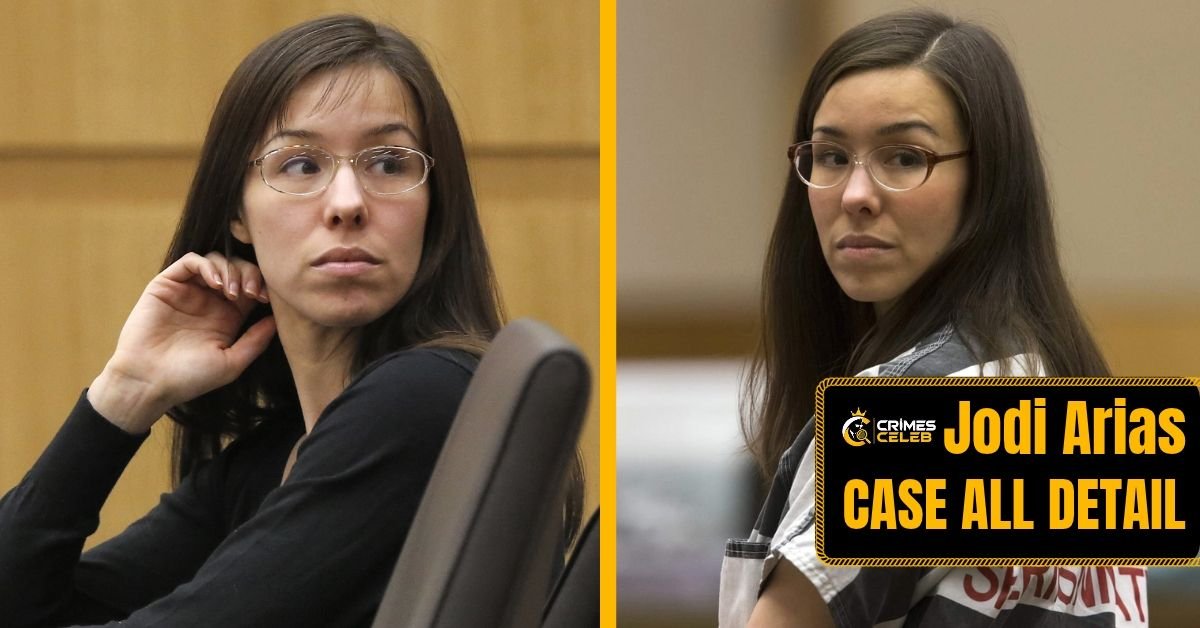
Few criminal trials in modern American history have held the public’s attention like the Jodi Arias case. A young salesman named Travis Alexander was killed in his Mesa, Arizona home in June 2008, and his former girlfriend was eventually convicted of the crime. The story combined a brutal killing, a defendant who changed her account several times, and a trial broadcast live to millions.
More than eighteen years after the killing, the case has not fully closed. Arias was convicted of first degree murder in 2013 and still wants to argue that she deserves a new trial, and the deadline for that filing has now been extended to January 29, 2027. That means searches such as “Jodi Arias now” and “is Jodi Arias still in jail” lead to an active court matter, not just a finished story.
This article walks through what happened, how police and prosecutors built their case, what the jury and judge decided, and what is publicly known about her status today. It separates court findings from claims and opinion, and it notes where public information stops. Where a detail is unclear or unavailable, the article says so.
Jodi Arias Case Quick Facts
The table below gathers the core facts that readers most often look for. Every entry reflects court outcomes or well documented reporting, and the sources behind them are named in the sections that follow. Anything that cannot be reliably confirmed is marked as such.
The case is formally titled the State of Arizona versus Jodi Ann Arias and was heard in Maricopa County Superior Court in Phoenix. Because the killing happened in Mesa, local police led the investigation, while the Maricopa County Attorney’s Office handled the prosecution.
| Detail | Information |
| Defendant | Jodi Ann Arias, born July 9, 1980 |
| Victim | Travis Victor Alexander, born July 28, 1977, age 30 at death |
| Date of killing | June 4, 2008 |
| Location | Mesa, Arizona |
| Conviction | First degree murder, May 8, 2013 |
| Sentence | Life in prison without the possibility of parole, April 13, 2015 |
| Prosecutor | Juan Martinez, Maricopa County Attorney’s Office |
| Defense attorneys at trial | L. Kirk Nurmi and Jennifer Willmott |
| Appeals | Conviction upheld by the Arizona Court of Appeals in April 2020 |
| Current prison | Perryville state prison complex, Goodyear, Arizona |
| Current legal step | Post conviction relief petition due January 29, 2027 |
| Net worth | Not reliably confirmed |
Who Is Jodi Arias?
Jodi Ann Arias was born on July 9, 1980, which makes her 46 years old as of November 2026. She grew up in California and later lived in Yreka, in the northern part of the state. Before the killing she was a relatively private person with no public profile, which is part of why the later media attention felt so sudden.
She met Travis Alexander in Las Vegas in 2006, and the two began dating in early 2007. Arias moved to Mesa to live closer to Alexander, but in April 2008 she moved to Yreka and lived there with her grandparents. By then the romantic relationship had ended, although the two remained in contact and, by the accounts presented at trial, kept an on and off connection.
At the time of the killing she was 27 years old. Some online summaries give her age as 28, so readers will see small differences between sources. Her date of birth and the June 2008 date of the crime support the younger figure, and her current age follows from the same birth date.
Read More: Kobe Bryant Autopsy Report: Official Findings, Cause Of Death And What Is Confirmed
Who Was Travis Alexander?
Travis Alexander was 30 years old when he died. He worked as a salesman and was building a reputation as a motivational speaker, and friends described him as ambitious and outgoing. He was an active member of the Church of Jesus Christ of Latter day Saints, a detail that came up repeatedly at trial because of the couple’s private conduct and the pressures it allegedly created.
He lived in a home on East Queensborough Avenue in Mesa. He had planned a trip to Cancun, Mexico, for the days after his death, and his absence from an important conference call on the evening of June 4 was one of the first signs that something was wrong.
Alexander’s family attended much of the trial and later hearings. His sister, Samantha Alexander, has continued to speak in court. At the August 2026 hearing she told the judge the family had expected closure, and said the ongoing proceedings continue to disrupt their lives. Her statements are a reminder that the legal process has an ongoing human cost for the victim’s relatives.
What Happened On June 4, 2008?
Mesa police were called to the home on the night of June 9, 2008, and found the decomposing body of Alexander in the shower. He had been dead for five days. The medical examiner testified at trial that the injuries included a gunshot wound to the forehead, a slit throat, and a large number of stab wounds. Court summaries and reference sources count 27 stab wounds.
Investigators reconstructed the day through digital evidence. Police recovered deleted images showing Arias and Alexander taken at about 1:40 p.m. on June 4, and the last photograph of Alexander alive, in the shower, was taken at 5:29 p.m. That time stamp became one of the most important pieces of the prosecution’s timeline, because it placed the killing shortly afterward.
Prosecutors also pointed to Arias’s travel in the days before. She rented a car on June 2, drove to Mesa, and arrived unannounced early on June 4, according to the county prosecutor’s account. The same summary notes that she borrowed two gas cans from a former boyfriend along the way. The defense disputed what the prosecution said those details meant.
How Police Built The Case Against Jodi Arias
Investigators did not rely on a single piece of evidence. They assembled a combination of physical evidence, digital records, and the defendant’s own statements. The jury ultimately heard from dozens of witnesses over several months of testimony.
The most discussed items of evidence included:
- A bloody palm print at the scene that was later matched to Arias, according to the Maricopa County Attorney’s Office
- A camera found damaged and in a washing machine, from which police recovered deleted photographs that fixed the timeline
- The rental car trip and the borrowed gas cans, which prosecutors said showed planning
- A recorded phone conversation between Arias and Alexander, played for jurors, describing their intimate relationship
- Arias’s shifting statements to police over a period of two years
Her changing accounts mattered a great deal. Arias first told police she had nothing to do with the death, later claimed masked intruders were responsible, and about two years after her arrest admitted killing Alexander but said it was self defense. Prosecutors argued that the progression of stories pointed to a defendant adjusting her account to match the evidence, while the defense argued she had been afraid and confused.
The evidence presented in court included graphic scene and autopsy photographs. Those images were part of the public trial record, and widespread online searches for “Jodi Arias crime scene photos” reflect public curiosity about them. This article does not reproduce or describe them in detail, since the facts above fully explain what the jury considered.
Read More: Edward James Porter: Who He Is, Why He Was Charged And What the Nolan Wells Threats Case Shows
Jodi Arias Case Timeline
The case moved slowly, with long gaps between major events. A year by year view helps show how the story developed, from the killing to the current post conviction stage. The table lists only events supported by court records or established reporting.
The timeline also explains why the case still appears in the news. Post conviction proceedings in Arizona can continue for years, and several sealed filings since 2024 have limited what the public can see.
| Date | Event |
| February 2007 | Arias and Alexander begin dating |
| April 2008 | Arias moves to Yreka, California |
| June 4, 2008 | Alexander is killed in his Mesa home |
| June 9, 2008 | Police find his body after a welfare check |
| July 2008 | Arias is arrested |
| December 10, 2012 | Jury selection begins |
| May 8, 2013 | Jury convicts Arias of first degree murder |
| May 23, 2013 | Penalty phase jury deadlocks, resulting in a mistrial |
| April 13, 2015 | Judge sentences Arias to life without parole |
| April 2020 | Arizona Court of Appeals upholds the conviction |
| February 2021 | Arias files notice seeking post conviction relief |
| August 28, 2026 | Judge extends the filing deadline to January 29, 2027 |
The Trial And The Self Defense Claim
The trial began with jury selection on December 10, 2012, and drew national coverage. Arias testified in her own defense and spent 18 days on the witness stand. Her central claim was that Alexander had been abusive and that she killed him to protect herself. The prosecution rejected that account and argued the killing was planned.
The defense described a relationship marked by control and volatility. Prosecutors responded that the physical and digital evidence did not support a spontaneous act of self defense, pointing to the sequence of events, the number of injuries, and her later statements. Jurors had to weigh two opposing narratives, and they heard from experts for both sides.
Prosecutor Juan Martinez became one of the most recognizable figures of the proceedings because of his intense cross examination of Arias and other defense witnesses. The trial included 64 days of testimony, and the jury deliberated for less than three days before returning its verdict. The speed of the verdict, compared with the length of the trial, drew comment from legal observers.
Verdict, Penalty Phase And Sentence
On May 8, 2013, the jury found Arias guilty of first degree murder. Prosecutors had sought the death penalty, so the case moved into a separate penalty phase. Under Arizona law, jurors in that phase must be unanimous before a death sentence can be imposed.
That unanimity never came. The first penalty jury deadlocked in May 2013 and a mistrial was declared. A second penalty jury was later seated, and it also could not agree. Two jury panels could not agree on whether she should receive the death penalty, and a judge subsequently sentenced her to life in prison without the possibility of parole.
Judge Sherry Stephens imposed that sentence on April 13, 2015. In practical terms, the answer to “will Jodi Arias ever get out” is that the sentence does not include a parole option. Arizona abolished parole for most crimes committed after 1993, so the only realistic routes to release would be a successful legal challenge or some form of executive clemency, neither of which has been established.
Appeals And The Fight For A New Trial
Arias appealed her conviction, arguing among other things that the prosecutor’s conduct had unfairly affected the trial. The Arizona Court of Appeals upheld her conviction in April 2020, and the Arizona Supreme Court declined to take up her case. That ended the direct appeal process in early 2021.
She then moved into a second stage called post conviction relief. In this process, a defendant generally cannot repeat arguments already raised on appeal and must instead present new facts that could have changed the verdict or sentence. Her deadline, initially set for April 2021, has received continual extensions over the years.
At the August 28, 2026 hearing, Judge Aryeh Schwartz granted another extension. Her attorney, Christopher Stavris, cited health problems among members of the defense team and a hard drive belonging to Arias that he said was still held by Mesa police. Prosecutors had asked the judge to hold firm on the earlier September 2 date. Most of her filings since August 2024 have been sealed, and the August hearing itself was sealed. What exactly she will argue remains unclear, and no court has ruled that she is entitled to a new trial.
Jodi Arias Now: Prison, Agend Public Status
Jodi Arias is currently in custody at the Perryville state prison complex in Goodyear, Arizona. She appeared at the August 2026 hearing, gave her name and date of birth, and otherwise remained silent, according to the Arizona Republic’s reporting. She is 46 years old.
Her current prison photograph is published by the Arizona Department of Corrections, which is why many searches for her mugshot lead to recent images. Beyond court filings and official records, details about her daily life are limited, and several websites that claim detailed updates do not cite verifiable sources. Readers should treat those pages with caution.
Some outlets have also reported that she writes a blog and sells artwork from prison. Those claims come from entertainment coverage, and this article could not confirm specifics such as sales figures. For the most reliable updates, official court records and the Arizona Department of Corrections remain the better references.
The Prosecutor And The Controversy Around Juan Martinez
Juan Martinez led the prosecution and became a household name during the trial. His style was aggressive, and defense lawyers later argued that it crossed a line. Arias cited his conduct in her appeal and has continued to investigate it in her post conviction effort.
Martinez agreed to disbarment in July 2020, ending an investigation by the State Bar of Arizona. The Bar investigated allegations that included sharing inside information about the case with a blogger and lying to investigators about a personal relationship with her. These were allegations examined by the Bar, and Martinez’s agreement to disbarment ended that inquiry.
It is worth being precise about what this does and does not mean. The disciplinary matter involved his conduct, not the evidence against Arias, and no court has held that his behavior invalidated her conviction. Filings show her team has examined records of his disciplinary case and communications around his book, “Conviction: The Untold Story of Putting Jodi Arias Behind Bars.”
Documentaries And Movies About Jodi Arias
The case has produced a long list of television and streaming projects. Some are documentaries built on trial footage and interviews, while others are dramatized films. Titles vary in quality and accuracy, so viewers should check how each one describes the court findings.
Reports from entertainment outlets list several notable titles. A Lifetime film called Dirty Little Secret dramatized the story in 2013, and searches for its cast remain common. Later projects include the following:
- Jodi Arias: An American Murder Mystery, from Investigation Discovery in 2018
- If I Can’t Have You: The Jodi Arias Story in 2021
- Love You to Death: The Jodi Arias Story, a Tubi Original in 2023
- Obsessed: Unraveling Jodi Arias in 2025, which reportedly draws on her journals and prison footage
Read More: Kohen Wiley Mother: What Is Publicly Known About Vellesiya Wiley And The Senatobia Case
Why The Jodi Arias Case Became So Famous
Several factors combined to make this case unusually visible. The trial was broadcast, which allowed viewers to watch testimony in real time. The defendant testified for days, and the facts involved a mix of violence, private relationships, and religion that fit the appetite of cable news at the time.
The case is often compared with Casey Anthony’s trial, which ended in 2011 with an acquittal on the murder charge in the death of her daughter. The comparison is common because both defendants were young women in highly publicized trials. The legal outcomes were opposite, however, since Arias was convicted.
Its continued fame also owes something to the long legal tail. New documentaries, the prosecutor’s disbarment, and years of appeals have kept it in the news. That sustained attention helps explain why queries like “why is the Jodi Arias case so famous” still draw so many readers.
Frequently Asked Questions
What did Jodi Arias do?
A jury convicted her of first degree murder in the June 4, 2008 killing of her former boyfriend, Travis Alexander, in Mesa, Arizona. She admitted killing him but claimed self defense, which the jury rejected.
Is Jodi Arias still in jail?
Yes. She is held at the Perryville state prison complex in Goodyear, Arizona, serving a sentence of life without the possibility of parole. She appeared in court there on August 28, 2026.
How old is Jodi Arias?
She was born on July 9, 1980, so she is 46 years old as of November 2026. She was 27 when the killing occurred in 2008.
Can Jodi Arias be released?
Her sentence does not allow parole. A release would require a successful court challenge, such as a granted new trial, and no such ruling has been made. Her post conviction petition is currently due on January 29, 2027.
Why was Jodi Arias not sentenced to death?
Two separate penalty phase juries failed to reach a unanimous decision. Because Arizona requires unanimity for a death sentence, the judge sentenced her to life without parole on April 13, 2015.
Who was the prosecutor in the Jodi Arias case?
Juan Martinez of the Maricopa County Attorney’s Office led the prosecution. He later agreed to disbarment in July 2020 after a State Bar of Arizona investigation into his conduct.
What is Jodi Arias’s net worth?
No reliable figure has been established. She is an incarcerated person, and websites that publish specific net worth numbers do not provide verifiable sources. Any such figure should be treated as unconfirmed.
Does Jodi Arias’s family visit her?
Public records and reputable reporting do not clearly document visits by her family. Prison visitation details are generally private, so this question cannot be answered reliably from public sources.
Conclusion
The Jodi Arias case centers on a verified set of facts: Travis Alexander was killed on June 4, 2008, Jodi Arias was convicted of first degree murder on May 8, 2013, and she was sentenced to life without parole on April 13, 2015. Her conviction was upheld on appeal in 2020, and no court has overturned it.
What remains open is the current post conviction effort. Her filing deadline now sits at January 29, 2027, much of the activity is sealed, and the family of the victim has asked for closure. Readers following the Jodi Arias case should rely on court records and established news outlets for updates, since many pages that promise the latest developments repeat unsourced claims.

Rohan Verma is the author behind Crimes Celeb, focusing on celebrity-related crimes, crime news, famous criminals, celebrity scandals, and unsolved mysteries. Their goal is to deliver accurate, engaging, and informative stories that uncover the darker side of fame and make complex crime cases easier to understand.



One Comment